Most paid media case studies open on an account that already exists. Something is running, something is wasted, and the work is repair. Building from nothing is a different job. There is no click history to read and no audience that has converted before, so every number on the page is a first.
Hyperbound trains salespeople at large enterprises using AI role plays, covering cold calls, discovery and negotiation. Sriharsha "Sai" Guduguntla co-founded the company and runs it as CEO, and it went through Y Combinator in the summer 2023 batch. When Understory Agency started in February 2025 there was no paid media at all. Neither founder had ever run a campaign.
What Hyperbound wanted was a channel that produced meetings with enterprise buyers on a schedule they controlled. The worry going in was uncertainty. They did not know where to start, they had no number in mind for a monthly budget, and they had no sense of how long paid takes to produce anything.
The relationship is now Understory Agency's longest continuous paid engagement. A single targeting change in May 2026 took cost per click down 35% and moved ICP share of clicks from 75% to 89%. Across the program, 50 of 282 influenced accounts booked a meeting, or 18%, on 31,641 paid impressions. Thought-leader ads running against Sai's own posts hit 10.16% CTR against a stated LinkedIn B2B benchmark of 0.45%.
Here is how we built it.
| Industry | AI sales roleplay and training, Y Combinator S23 |
|---|---|
| Headquarters | San Francisco, CA |
| Services | Paid search and paid social, run by Understory Agency |
| Engagement | Live February 2025, ongoing, and Understory Agency's longest continuous paid engagement. Engagements typically run 6 months |
| Headline result | Cost per click down 35% and ICP share of clicks from 75% to 89% after a single targeting change in May 2026 |
Performance Summary (February 2025 to June 2026)
- Cost per click: down 35% after the May 2026 targeting change, from $17.66 to $11.48
- ICP share of clicks: 75% to 89%
- Influenced accounts that booked a meeting: 50 of 282, or 18%, on 31,641 paid impressions
- Thought-leader ad CTR: 10.16% against a stated LinkedIn B2B benchmark of 0.45%
- First 5.5 months of LinkedIn: 511,000 impressions on $61,000 invested, with 14 demo meetings booked directly
- Google Ads best fortnight: 147 conversions on $6,869, a $46.73 cost per acquisition
About Hyperbound
Industry: AI sales roleplay and training
Hyperbound trains salespeople at large enterprises through AI role plays, from cold calls through discovery calls to negotiations. A rep pitches the AI or runs a discovery conversation with it, and the platform returns feedback and coaching on the performance. The company went through Y Combinator in the summer 2023 batch and is headquartered in San Francisco. Understory Agency has run Hyperbound's paid search and paid social since February 2025.
The Challenge
Understory Agency inherited nothing to fix, which sounds easier than it is. Hyperbound had no account, no spend history and no internal benchmark for what a click in their category should cost. Every decision in the first quarter had to run on category knowledge, because the account had not produced any data of its own yet.
The second problem was choosing who would build it. Sai spoke to several agencies. Each one arrived with a long document full of promises, and all of the promises sounded good. A founder with no paid experience has no way to test which set of them is real, so the usual selection criteria stop working. Referrals settled it. Understory Agency kept coming up in his conversations with other founders, particularly inside his Y Combinator batch, and the first call was specific about what paid could and could not do at their stage.
The numbers before we began
Understory Agency audits the paid picture before scoping any engagement. In Hyperbound's case the audit had almost nothing to read:
👉 No paid media at all. No channel was live when Understory Agency started in February 2025
👉 Neither founder had ever run a campaign, so there was no internal experience to build on
👉 No budget benchmark. They did not know how much a company at their stage should be spending
👉 No timeline for results. They did not know how long paid takes to produce meetings
👉 No in-house paid hire, so the first campaign would be built by an agency or not at all
The Strategy: Fund the whole funnel, then narrow it to the buyer
Understory Agency's first decision on a zero-history account is where the money goes, because there is no performance data to defer to. Hyperbound's non-recruitment spend across a 90-day window came to $105,137, weighted 42% to top of funnel, 30% to bottom of funnel and 28% to the middle. A company whose category is young does not yet have buyers searching for it by name, so the top of the funnel has to create the demand that the bottom then catches. Weighting it the other way produces a very efficient bottom-of-funnel campaign with almost no volume flowing into it.
LinkedIn carried the top of that funnel first. The first 5.5 months produced 511,000 impressions on $61,000 invested, with 14 demo meetings booked directly and a promoted-post CTR of 8.5% against a target of 3% set at launch. Google Ads went live alongside it with a 3% minimum CTR target and reached 4.67% within 2 months. Both targets were written before a single click had been bought. That is the part of an early-stage plan most likely to be wrong, so clearing them early mattered more than the raw numbers suggest.
The change that reshaped the account came in May 2026, and it landed on targeting. The audience was tightened onto the titles that actually buy sales enablement software, meaning VP, Director and CXO. Precision at that level does 2 things at once. It raises the share of budget landing on people who can sign. It also pulls the average price of a click down, because the impressions being removed were the expensive ones.
| Metric | Before | After |
|---|---|---|
| ICP share of clicks (VP, Director and CXO) | 75% | 89% |
| Average cost per click | $17.66 | $11.48 |
| Enablement and RevOps image ad CTR | 3.02% | 3.80% |
| Sales leads ad CTR | 2.30% | 3.56% |
| Enablement and RevOps video ad CTR | 1.37% | 2.40% |
Alongside the table, $4,500 of off-ICP spend was cut and daily clicks rose 36%. Cost per click fell 35%. A narrower audience delivering more clicks at a lower price looks contradictory on paper. It happens when the waste being removed is large enough to fund the extra volume.
Creative learning ran in parallel and 2 findings carried most of the value. Thought-leader ads placed against Sai's own posts reached 10.16% CTR with 771 engagement clicks and 6.8 seconds of average dwell time, against a stated LinkedIn B2B benchmark of 0.45%. Retargeting video also proved dramatically cheaper than static demo-request ads, running at $12 cost per acquisition against $55 to $75 in June 2026. Both findings point the same way. Audiences at the top of an enterprise funnel respond to a person and to motion, and the budget was moved accordingly.
Underneath the creative work, the rest of the program filled in:
- Webinars produced 34 native form leads at a $511 blended cost per lead, with one June webinar delivering 27 of them at $585.
- Google Ads recorded a best fortnight of 147 conversions on $6,869, a $46.73 cost per acquisition with CTR at 11.52%. On the same account, US non-brand search returned 105 conversions at $16.88.
- Reporting ran at the account level, which is how 282 influenced accounts and the 31,641 paid impressions behind them became the unit of measurement.
- Results were aggregated into a summary deck before every weekly meeting, so decisions were made against one prepared view that had already been pieced together.
The Results (February 2025 to June 2026)
👉 Cost per click down 35% after the May 2026 targeting change, from $17.66 to $11.48
👉 ICP share of clicks from 75% to 89%, counting VP, Director and CXO titles
👉 $4,500 of off-ICP spend cut, with daily clicks up 36% over the same change
👉 50 of 282 influenced accounts (18%) booked a meeting on 31,641 paid impressions, with named influenced accounts including Microsoft, iHeartMedia, Five9, MongoDB, 1Password and Cribl
👉 Thought-leader ads on the founder's own posts at 10.16% CTR, with 771 engagement clicks and 6.8 seconds of dwell time, against a stated LinkedIn B2B benchmark of 0.45%
👉 511,000 LinkedIn impressions on $61,000 invested across the first 5.5 months, with 14 demo meetings booked directly and promoted-post CTR at 8.5%
👉 Retargeting video at $12 cost per acquisition against $55 to $75 for static demo-request ads in June 2026
👉 Google Ads at 147 conversions on $6,869 in the account's best fortnight, a $46.73 cost per acquisition at 11.52% CTR
👉 US non-brand search at 105 conversions at $16.88 on the same account
👉 34 webinar form leads at a $511 blended cost per lead, including 27 at $585 from a single June webinar
👉 Google CTR at 4.67% within 2 months against the 3% minimum target set at launch
👉 3 ad segments improved CTR on the same targeting change, with image ads to enablement and RevOps moving from 3.02% to 3.80%
Key Takeaways
- Decide the funnel split before the first ad is written. An account with no history has no performance data to defer to. The weighting across top, middle and bottom of funnel is the first real decision, and it sets the ceiling on everything after it.
- Audience precision is the cheapest cost-per-click lever available. Tightening onto the titles that can actually sign raises the share of clicks that matter and takes the average price down, because the impressions being removed are the expensive ones.
- A founder's own posts outperform the company account by a wide margin on paid social. Running thought-leader ads against real posts from a real person is worth testing before another round of brand creative.
- When a company has no paid history, the usual way of choosing an agency stops working. Every pitch document is persuasive and none of them is testable, so the signal worth weighting is how specific a team is about what will not work at your stage.
What Hyperbound says
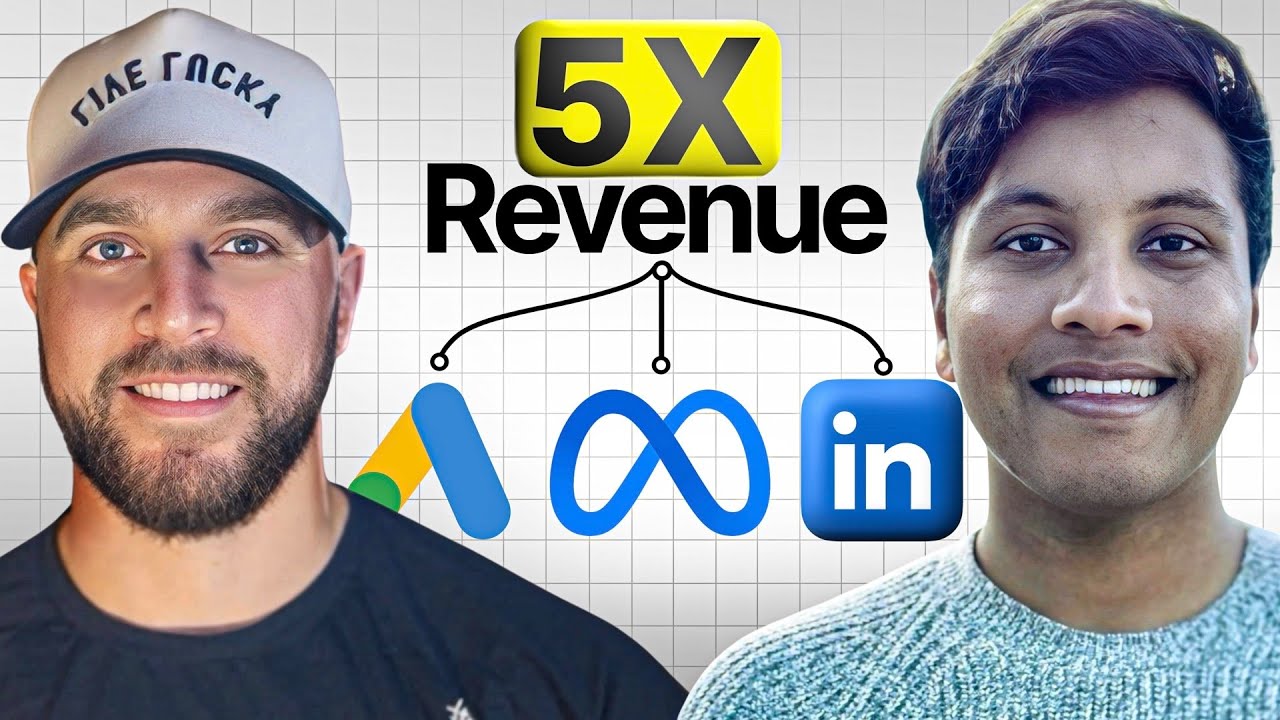
“To say the least, this year we've 5x'd our revenue since we started working with Understory.”
“They all have this long doc with all these promises... it's almost easy to tell when someone's telling the truth versus someone is just kind of bullshitting. From the moment I started speaking with you and Ollie, it always felt like you were very transparent, very real about what's possible.”
One note on that first quote, because it matters. Sai puts the revenue picture at 5x in the year Hyperbound worked with Understory Agency, and he credits a $15M Series A and growth-stage momentum in the same breath. There is no paid-attributed revenue figure behind the 5x and Understory Agency does not claim one.
Conclusion
Hyperbound started with no campaign running and no click history. Neither founder had ever bought an ad. The program now spans paid search and paid social, and it reports at the account level. Influenced accounts include Microsoft, iHeartMedia, Five9, MongoDB, 1Password and Cribl. A single targeting change in May 2026 took cost per click down 35% and lifted ICP share of clicks from 75% to 89%, and 18% of influenced accounts have booked a meeting.
The uncertainty Hyperbound described is the normal condition for a founder at that stage. There is no budget benchmark to work from and no timeline anyone will commit to. There is also no reliable way to tell a good agency pitch from a merely confident one. Understory Agency has now run this program continuously since February 2025, which is longer than any other paid engagement on their books.
FAQ
How much should an early-stage B2B SaaS company spend on paid media to start?
How do you lower cost per click on LinkedIn ads?
Do LinkedIn thought leader ads perform better than standard company ads?
Related reading
- Understory Agency paid media, the service line behind this engagement.
- Best B2B SaaS paid media agencies, the buyer's guide to this category.
- Hyperbound, AI role plays for sales training.
- Forthcoming in the paid media cluster: Doppel, Northbeam and Vicarius.