Every B2B executive has been told to post on LinkedIn. The advice is right and the mechanics are unforgiving. The platform is heavily algorithm-driven and it rewards accounts that publish often, so a profile that goes quiet comes back to a colder audience than the one it left. Executives are the people least able to publish often.
Operatus is a revenue operations consultancy in New York. Chris Fezza, its CEO and Co-Founder, already knew LinkedIn was a powerful channel. He had watched it work for friends and connections, and he got decent results whenever he posted. Consistency was the part he could not hold. In his own description he would go in spurts.
What Operatus wanted was a profile that published on the platform's schedule, in Chris's own voice, carrying the technical depth a revenue operations audience reads for. The constraint was the CEO's calendar, and no amount of good intent moves that.
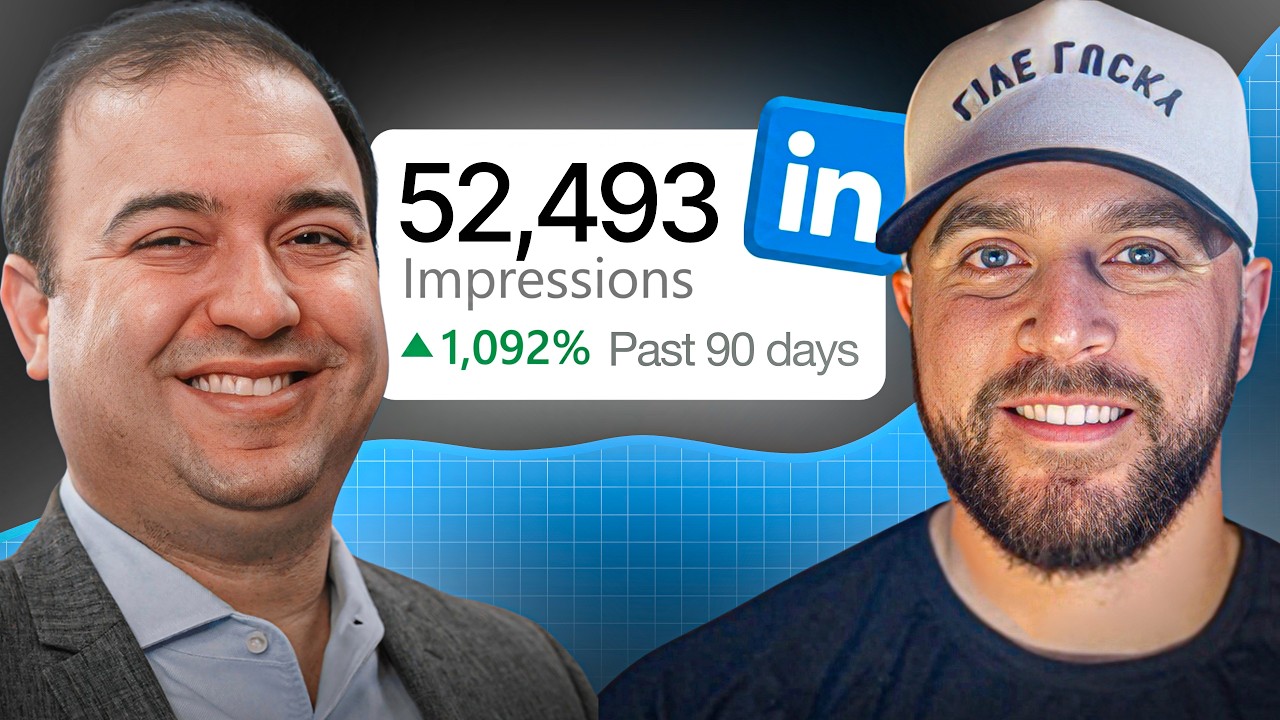
Across the first 140 days of the engagement, the profile produced roughly 200,000 impressions. That is an increase of more than 400% on the prior period, with roughly 1,200 followers added and 400+ saves. The input from Chris was 90 minutes a month.
Here is how we built it.
| Industry | RevOps consultancy |
|---|---|
| Headquarters | New York, NY |
| Services | LinkedIn content and go-to-market engineering, run by Understory Agency |
| Engagement | Live January 2026, ongoing. Understory Agency engagements typically run 6 months |
| Headline result | Roughly 200,000 impressions in 140 days on 90 minutes of the CEO's time a month |
Performance Summary (the first 140 days)
- Impressions: roughly 200,000
- Increase on the prior period: more than 400%
- Followers added: roughly 1,200
- Saves: 400+
- Best single post: 250+ likes and roughly 50,000 impressions
- CEO time in, posts out: 90 minutes a month, 10 to 20 posts
About Operatus
Industry: RevOps consultancy
Operatus is a revenue operations consultancy headquartered in New York, and Chris Fezza is its CEO and Co-Founder. It is a services business, which shaped what the profile publishes, because Chris wanted it to carry conceptual thinking and the specifics of actual client work in the same feed. Understory Agency has run Chris Fezza's LinkedIn content since January 2026, and also works with Operatus on go-to-market engineering.
The Challenge
Chris Fezza came to Understory Agency with a channel he already believed in. He had seen LinkedIn work for people he knew, and he got decent results on the occasions he posted. LinkedIn wants accounts that post frequently and comment frequently, and a CEO's week does not produce that on its own. Posting in spurts is what most founder profiles settle into, and the algorithm treats a spurt as a standing start every time.
A second gap sat underneath the first one. What was already published read as surface-level marketing, without much of the technical depth a revenue operations audience reads for. Volume on its own would not have closed that, because the people worth reaching in a technical category scroll past generic marketing content faster than anyone else does.
How Chris found us is the most self-evidencing proof point this service line has. He came in through the Clay partner programme, then booked a call with us on the strength of Understory Agency's own LinkedIn content. What he noticed was that it was authentic and interesting, and that it balanced conceptual thinking with specifics about the work the company was doing for clients. As a fellow services business, that balance was exactly what he wanted for himself. Our content marketing sold our content service.
The numbers before we began
Understory Agency starts every LinkedIn Content engagement by mapping what the executive already has. In January 2026, Chris Fezza's profile had:
👉 A channel he already believed in, with decent results whenever he posted and no way to keep posting
👉 Posting in spurts, in his own description, against an algorithm that rewards frequency above almost everything else
👉 Content with little technical depth, reading as surface-level marketing in a category where buyers read for specifics
👉 No production process behind the profile, so every post needed the CEO to find a topic and an hour in the same week
👉 A prior period of inconsistent posting, which became the comparison baseline for every number below
The Strategy: Take 90 minutes of the CEO, build a month of posts out of it
Frequency is the price of entry on LinkedIn and the executive's calendar is the binding constraint. Understory Agency builds the model around that constraint. Everything only Chris can supply stays with Chris, and that is a short list: his opinions, his judgement calls, and the specifics of work his firm has actually done. Everything else is ours. The design goal is to take the smallest possible amount of his time while keeping all of the substance that makes the posts worth reading.
The engagement opens with a comprehensive onboarding form at signup, and the timing of it is deliberate. Chris made the point better than we do. The moment a client signs is the moment they are most willing to sit down and dump everything out, so that is the moment to ask for it. From there we proposed topics and iterated them with him against 7 content pillars, which gives the profile a defined territory to own on the platform.
Then the monthly engine starts. Chris sits for one 90-minute interview a month against a question set prepared in advance, and each topical question carries 2 or 3 follow-up probes. The probes are the part that matters. The first answer to any question is the surface answer, and the detail worth publishing usually sits 2 questions deeper. That single call produces 10 to 20 posts. Posts go back to Chris every week for edits and approval, and after the first month he had almost no changes to make, because the voice had converged that quickly.
Format matters as much as cadence, and one format separated itself. Predictions and hot takes cleared 60 to 80 likes at minimum, at roughly a 100% hit rate, which makes it the shape worth returning to. Images and infographics are produced to the client's own brand guidelines, and Operatus liked the designs enough to consider repurposing them elsewhere. The delivery model, end to end:
- A comprehensive onboarding form at signup, run at the point the client is most willing to hand over everything they know.
- A topic proposal, iterated with the client against 7 content pillars.
- One 90-minute interview a month against a prepared question set, with 2 or 3 follow-up probes per topic.
- 10 to 20 posts produced from that single call.
- Weekly review and approval, so the final word stays with the executive.
- Images and infographics produced to the client's brand guidelines.
The last thing worth saying is how the reach actually arrived, because it says something true about the platform. One post carried roughly a quarter of all impressions in the period, and the best single post did 250+ likes and roughly 50,000 impressions. Nobody can pick that post in advance. Volume is what buys the ticket, and the best 2-week window in the period ran to roughly 75,000 impressions and 280 saves on the back of it.
The Results (the first 140 days)
👉 Roughly 200,000 impressions on Chris Fezza's profile across the first 140 days
👉 More than a 400% increase on the prior period
👉 Roughly 1,200 followers added, and 400+ saves on the content
👉 Best single post at 250+ likes and roughly 50,000 impressions
👉 Best 2-week window at roughly 75,000 impressions and 280 saves
👉 Predictions and hot takes at 60 to 80 likes minimum, at roughly a 100% hit rate
👉 10 to 20 posts a month out of 90 minutes of the CEO's time
👉 One post carried roughly a quarter of all impressions in the period
Key Takeaways
- The executive's calendar is the real constraint, so design the production model around it. One prepared 90-minute interview a month can carry 10 to 20 posts when the questions are written in advance and every topic gets 2 or 3 follow-up probes.
- Ghostwriting holds up when the ideas belong to the executive and only the formatting does not. The test is whether a reader who meets that person afterwards gets the same person they read.
- Frequency is the price of entry and the outlier post is the prize. A single post can carry a quarter of a period's impressions, and nobody picks it in advance, so publishing volume is what buys the chance of it.
- Depth is the differentiator in a technical category. Surface-level marketing content gets scrolled past by the exact audience worth reaching, and the way to avoid writing it is to interview the person who actually does the work.
What Operatus says
“The idea of a ghostwriter probably has negative connotations, but literally he's not making up any of this. This is all coming from me. He is really just taking it and formatting it into the post.”
“In B2B, we're not going to be hiring spokespeople for TV ads. You kind of have to just be yourself and put yourself out there.”
Conclusion
Operatus started with a CEO who believed in LinkedIn and could not post consistently. 140 days later the profile had produced roughly 200,000 impressions, more than 400% above the prior period, with roughly 1,200 followers added and 400+ saves. The recurring cost to Chris Fezza is 90 minutes a month and a weekly approval pass, and the second-order return he points to is the one he did not expect. People comment, dialogue starts, and his network widened in a way it had not before.
The same constraint sits on almost every B2B executive. The channel works, the algorithm wants frequency, and frequency is the one thing a founder's calendar cannot produce on its own. Understory Agency builds the production line around the 90 minutes the executive actually has, and keeps the ideas where they belong.
FAQ
What does a LinkedIn ghostwriting agency actually do for a founder?
How much of an executive's time does founder-led LinkedIn content take?
Does ghostwritten LinkedIn content still sound like the founder?
Related reading
- Understory Agency LinkedIn content, the service line behind this engagement.
- Best LinkedIn ghostwriting agencies for B2B SaaS, the buyer's guide to this category.
- Operatus, the revenue operations consultancy.
- Forthcoming in the LinkedIn content cluster: RB2B.