
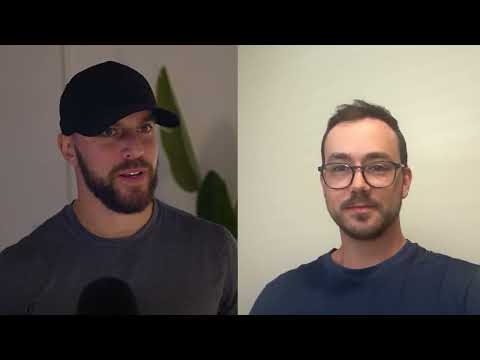
Cold email is usually treated as a volume problem. Find more contacts, send more sequences, and the reply count follows. That logic holds right up until the addressable market is small enough to count, and then it inverts. Every contact becomes finite. Burn one with a bad message or a bounced send and there is no second list underneath it.
PatientNow sells software into medical aesthetics and serves 5,000+ locations. Matthew Hoyle, VP Growth Marketing, put the size of the market plainly at the outset. He estimated around 12,000 med spas in the United States. He knew from day one that an outbound program at any real volume would burn through that list quickly.
PatientNow already had an outbound SDR team producing moderate success, and nobody in the company had done go-to-market engineering before. The goal was to take what was working and run it at a much larger scale without adding headcount. 2 structural facts shaped every decision after that. The market was small, and PatientNow is a multi-product company selling across several verticals, so no single message covered it.
Over 6 months from December 2025, the outbound program Understory Agency built and ran for PatientNow sent 242,750 emails. That produced 2,778 replies and 270 interested practices, at a lifetime bounce rate of 0.8% across a quarter of a million sends. The target was 1 positive reply per 500 contacts and the program came in at 1 per 250 to 321.
Here is how we built it.
| Industry | Vertical SaaS for medical aesthetics, serving 5,000+ locations |
|---|---|
| Headquarters | Colorado |
| Services | GTM engineering and outbound, run by Understory Agency |
| Engagement | Live December 2025. Understory Agency engagements typically run 6 months |
| Headline result | 242,750 emails, 2,778 replies and 270 interested practices at a 0.8% lifetime bounce rate |
Performance Summary (from December 2025)
- Emails sent: 242,750 over 6 months
- Replies: 2,778, split 1,653 handled manually and 1,125 automated
- Interested practices: 270
- Lifetime bounce rate: 0.8%
- Positive reply rate: 1 per 250 to 321 contacts, against a target of 1 per 500
- Campaigns: 29 across 3 product lines
About PatientNow
Industry: Vertical SaaS for medical aesthetics
PatientNow builds software for the medical aesthetics industry and serves 5,000+ locations. The company is headquartered in Colorado and sells multiple products across several verticals, including med spas and the weight and wellness category. Understory Agency ran PatientNow's GTM engineering and outbound program from December 2025.
The Challenge
Understory Agency was hired to scale something that already worked. PatientNow's SDR team had found moderate success with outbound. What the company did not have was go-to-market engineering experience, and Matthew Hoyle was direct about the state of it at the outset. The SDR team was mostly an inbound team in his description, and it was not empowered by much automation. Outbound had not been a big area of investment.
The constraint underneath it is the part most outbound programs never have to solve for. PatientNow's addressable market is genuinely small. Matthew Hoyle's own estimate was around 12,000 med spas in the US, and he said from day one that a program at volume would burn through that list quickly. A program built for that has to earn more from every contact than a program pointed at a market of hundreds of thousands.
The second constraint pulled in the opposite direction. PatientNow is a multi-product company operating in a number of verticals, so a single sequence to a single persona was never going to represent what the company sells. Matthew Hoyle evaluated individual go-to-market engineering contractors before choosing Understory Agency, and his stated reason for choosing an agency was risk. A contractor brings one person's playbook. An agency brings the playbook with a team behind it.
The numbers before we began
Understory Agency maps what a company already has before building anything. In December 2025, PatientNow had:
👉 An outbound SDR team with moderate success, and no go-to-market engineering experience anywhere in the company
👉 An SDR team pointed mostly at inbound, without much automation behind it, in Matthew Hoyle's own description
👉 An addressable market Matthew Hoyle estimated at around 12,000 med spas in the US
👉 A multi-product company selling across several verticals, so no single campaign could carry the whole offer
👉 A market the standard B2B databases do not cover well, which meant the list had to be built from scratch
The Strategy: Build the list nobody sells, then protect the infrastructure that sends to it
Understory Agency started with the list, because for this market there was nothing to buy. The standard B2B databases do not cover medical aesthetics practices well, so we built a Google Maps lead engine covering 5 verticals and more than 50 metros, against a universe of roughly 80,000 practices. Clay carried the TAM build on top of it, with a tech-stack waterfall and enrichment identifying which practices ran which systems. Everything downstream in this engagement traces back to owning that list build. A market this size cannot be re-bought if the first pass is wasted.
The sending infrastructure got the same treatment. Understory Agency built 210 branded mailboxes on PatientNow's own domains, replacing an older setup, and ran the campaigns as 4 angles across 2 domain pools, refreshed on a cycle with new domains cycling in. Daily send volume went from 600 to over 2,000 as planned. Volume at that level puts constant pressure on deliverability, which is where the most technical work of the engagement happened. In June the bounce rate ran at 3.6%. We purged the list down to valid-only addresses, and by late July it was at 1.3%. Across the whole engagement, 242,750 sends came in at a 0.8% lifetime bounce rate.
The single most copyable lever was segmentation by email provider. In March 2026 the program sent roughly 47,000 emails, made up of 21,000 net-new contacts and 26,000 follow-ups, and produced 69 positive replies and a closed deal. The campaigns doing that work were segmented by whether the recipient was on Google. Gmail-segmented campaigns replied at 2.7% and 3.4%, against 1% to 1.5% for non-Google recipients. Splitting a campaign on the recipient's email provider roughly doubled to tripled performance, and it costs nothing but a column in the list build.
2 findings from this engagement contradict the standard outbound playbook, and both are worth publishing. 47% of positive replies came from free email addresses. 23% came from generic info@ inboxes. Most outbound playbooks filter both out on sight, on the reasoning that a real buyer has a corporate domain and a named inbox. In an SMB vertical that filter would have removed the majority of the results. A med spa owner reads the info@ inbox because the med spa owner is the person who set it up.
Lead source turned out to matter more than raw volume, which is what a small market does to the economics. The core TAM list produced the most interested practices in absolute terms. The best rate per 1,000 contacted came from a list nobody would have prioritized on size.
| Lead source | Interested | Per 1,000 contacted |
|---|---|---|
| Industry event list | 10 | 2.8 |
| Weight and wellness vertical | 53 | 2.0 |
| Core TAM list | 92 | 1.6 |
| Med-spa scrapes | 48 | 0.8 |
| SMB and product lists | 41 | 0.7 |
Reply handling was engineered as its own system, because 2,778 replies is more than an SDR team can triage by hand alongside its inbound work. 1,653 were handled manually and 1,125 automated, through an AI reply and auto-responder system Understory Agency built inside PatientNow's own Clay instance, with 4-way intent classification routing each reply. The whole program ran into PatientNow's Salesforce and SDR workflows, including the custom objects their team already used, so a positive reply landed where the reps worked. Across the engagement, 29 campaigns ran across 3 product lines. The warm-up months of January and February produced 31 interested practices, and March and April produced 165, which was 61% of the entire engagement's output, off the core TAM list. In summary, Understory Agency built:
- 210 branded mailboxes on PatientNow's own domains, replacing an older setup.
- A Google Maps lead engine covering 5 verticals and more than 50 metros, against a universe of roughly 80,000 practices.
- Clay infrastructure for the TAM build, with a tech-stack waterfall and enrichment.
- An AI reply and auto-responder system inside PatientNow's own Clay instance, with 4-way intent classification.
- A campaign architecture of 4 angles across 2 domain pools, refreshed on a cycle.
The Results (from December 2025)
👉 242,750 emails sent over 6 months at a lifetime bounce rate of 0.8%
👉 2,778 replies, split 1,653 handled manually and 1,125 automated
👉 270 interested practices from 29 campaigns across 3 product lines
👉 1 positive reply per 250 to 321 contacts, against a target of 1 per 500
👉 Bounce rate from 3.6% in June to 1.3% by late July after a valid-only list purge, on a base of 210 branded mailboxes built on PatientNow's own domains
👉 Gmail-segmented campaigns replied at 2.7% and 3.4%, against 1% to 1.5% for non-Google recipients
👉 March 2026 sent roughly 47,000 emails, 21,000 net-new contacts plus 26,000 follow-ups, producing 69 positive replies and a closed deal
👉 January and February produced 31 interested practices during warm-up, and March and April produced 165, which was 61% of the entire engagement's output
👉 Daily send volume went from 600 to over 2,000, as planned
👉 47% of positive replies came from free email addresses, and 23% from generic info@ inboxes
Key Takeaways
- Segment campaigns by the recipient's email provider before you segment by anything else. Google-hosted inboxes filter differently from everything else, and a campaign written for one deliverability environment reads differently in the other. On this program the Google-segmented campaigns replied at roughly double to triple the rate of the rest, and the only cost was an extra column at list-build time.
- Free email addresses and generic info@ inboxes are not automatic exclusions. In an SMB vertical the owner is often the person reading the shared inbox, and the corporate-domain filter every enterprise playbook recommends will delete most of your buyers. Test the segment before you exclude it.
- A bounce rate is a maintenance number. It drifts upward as lists age. Purge down to valid-only addresses on a schedule. Send from mailboxes on domains you own. Rotate domains through pools so no single one carries the whole send volume.
- Track interested accounts per 1,000 contacted, per source, and let that decide where the next contacts come from. The biggest list is rarely the most efficient one. In a small market the difference between a source at 2.8 per 1,000 and one at 0.7 decides how long the whole program can run.
What PatientNow says
“It felt like Understory would de-risk things, because not only would we have the expertise and playbook and technology of one individual, but we would have the support of a full agency kind of weight behind it.”
“It's just the energy and the go-to-market engineering approach. It's definitely had a stamp on just how we think about things. The reason we adopted Clay and have even started thinking about building out this function internally kind of routes back to you guys.”
Conclusion
PatientNow came to Understory Agency with an SDR team that had proved outbound could work and no way to scale it without hiring. The program that followed sent 242,750 emails at a 0.8% lifetime bounce rate. It produced 2,778 replies and 270 interested practices. The positive-reply target was 1 per 500 contacts, and the program came in at 1 per 250 to 321. PatientNow then took the function in-house, built on what the engagement proved, and Matthew Hoyle frames that as validation. In his words, the reason PatientNow adopted Clay and started building the function internally routes back to Understory Agency.
Matthew Hoyle is also candid about where this model performs best, and the qualifier is worth carrying. Go-to-market engineering and outbound find their strongest success in industries with a large addressable market, in his assessment, and PatientNow made it work with a small one. That is the honest shape of outbound in a niche vertical. The market gives you a fixed number of shots. Volume alone has a ceiling you can see from the start, so the return comes out of the list build, the deliverability discipline and the segmentation. Understory Agency runs that program as the team.
FAQ
How do you lower a cold email bounce rate?
Does cold email work when the addressable market is small?
Should you exclude free email addresses and generic info@ inboxes from a cold email list?
Related reading
- Understory Agency GTM engineering, the service line behind this engagement.
- Best B2B SaaS cold email agencies, the buyer's guide to this category.
- PatientNow, software for the medical aesthetics industry.
- Forthcoming in the GTM engineering cluster: hapily, Expensify and WareSpace.